 (Image source: Gemini)
 Have you ever watched a child finish a book, close the cover with a satisfied thud, and then look completely blank when you ask what happened? It is a common frustration for parents and teachers alike. We often mistake the ability to read words on a page for the ability to understand the story. A study from 2024 showed that while students might score high on simple word recall, their ability to retell a coherent story is often much lower. So what does this actually mean for you? It means we need to stop treating retelling like a memory test and start treating it like a construction project. When a student retells a story, they are rebuilding the narrative in their own mind. This process of narrative reconstruction is where real comprehension happens. It is the difference between someone who can list the ingredients of a cake and someone who can actually bake one.
Why Retelling is More Than Just Recalling
If you think retelling is just a way to check if a kid was paying attention, it is time for a perspective shift. In the world of cognitive science, retelling is considered a heavy lift for the brain. It requires executive function, the ability to sequence events, and a solid grasp of narrative structure. It is a workout for the "Default Mode Network" in the brain.
Recent research from late 2025 shows that when we focus on the "why" behind a character's actions, we activate deeper neural pathways than when we only focus on physical details. Think of it like this. Perceptual details, like the color of a character's hat, are like temporary sticky notes in the brain. They fall off quickly. Conceptual details, like a character's motives or feelings, are more like ink. They leave a lasting mark.
Today, the "Science of Reading" has officially expanded into the "Science of Literacy." This means we are finally acknowledging that speaking and writing are as important as decoding. When you ask a child to retell a story, you are asking them to synthesize information. You are asking them to find the "gist" and discard the noise. That is a high level skill that serves them well beyond the classroom.
Foundational Techniques for Building the Narrative Scaffold
You can't expect a student to build a house without a frame. In the same way, you can't expect a coherent retell without a framework. The "Somebody Wanted But So Then" (SWBST) method is still the gold standard for a reason. It is simple, it is effective, and it works for almost any fiction text.
- Somebody: Who is the main character?
- Wanted: What was their goal or motivation?
- But: What was the problem or conflict that got in the way?
- So: How did they try to solve the problem?
- Then: What was the final outcome or resolution?
Many educators are starting to add an "M" to the end of this, making it SWBSTM. The "M" stands for Meaning. It pushes the student to move past the plot and identify the theme or the lesson learned. It's the "So what?" of the story.
Another heavy hitter is the updated "Five Finger Retell." We have used this for years, but the 2.0 version includes the palm of the hand. Although the fingers represent characters, setting, problem, events, and resolution, the palm represents the "Big Idea." It's the synthesis that holds everything else together. If a student can give you the fingers but not the palm, they haven't quite mastered the comprehension piece yet.
Advanced Retelling for Moving from Summary to Synthesis
Once a student has the basics down, it's time to turn up the heat. Simple summary is fine, but synthesis is where the real intellectual growth happens. One of the best ways to do this is through perspective shifting.
Ask your student to retell the story from the point of view of the antagonist or even a secondary character. How does the story change if the "villain" is the one telling it? This forces the brain to look at character motivation in a way that a standard retell never could. It requires empathy and a deep dive into the "why" of the narrative.
We also want to encourage "Text-to-Self, World, and Other Texts" (TSWT) connections. A retell shouldn't exist in a vacuum. Ask questions like, "How does this character's struggle remind you of that news story we saw yesterday?" or "Does this ending feel like the one in the book we read last month?" These connections are the glue that sticks new information to existing knowledge.
Modalities of Retelling for Diverse Learning Styles
Not every kid is a talker, and not every kid is a writer. If we only ask for one type of retelling, we are going to miss out on what some students actually know.
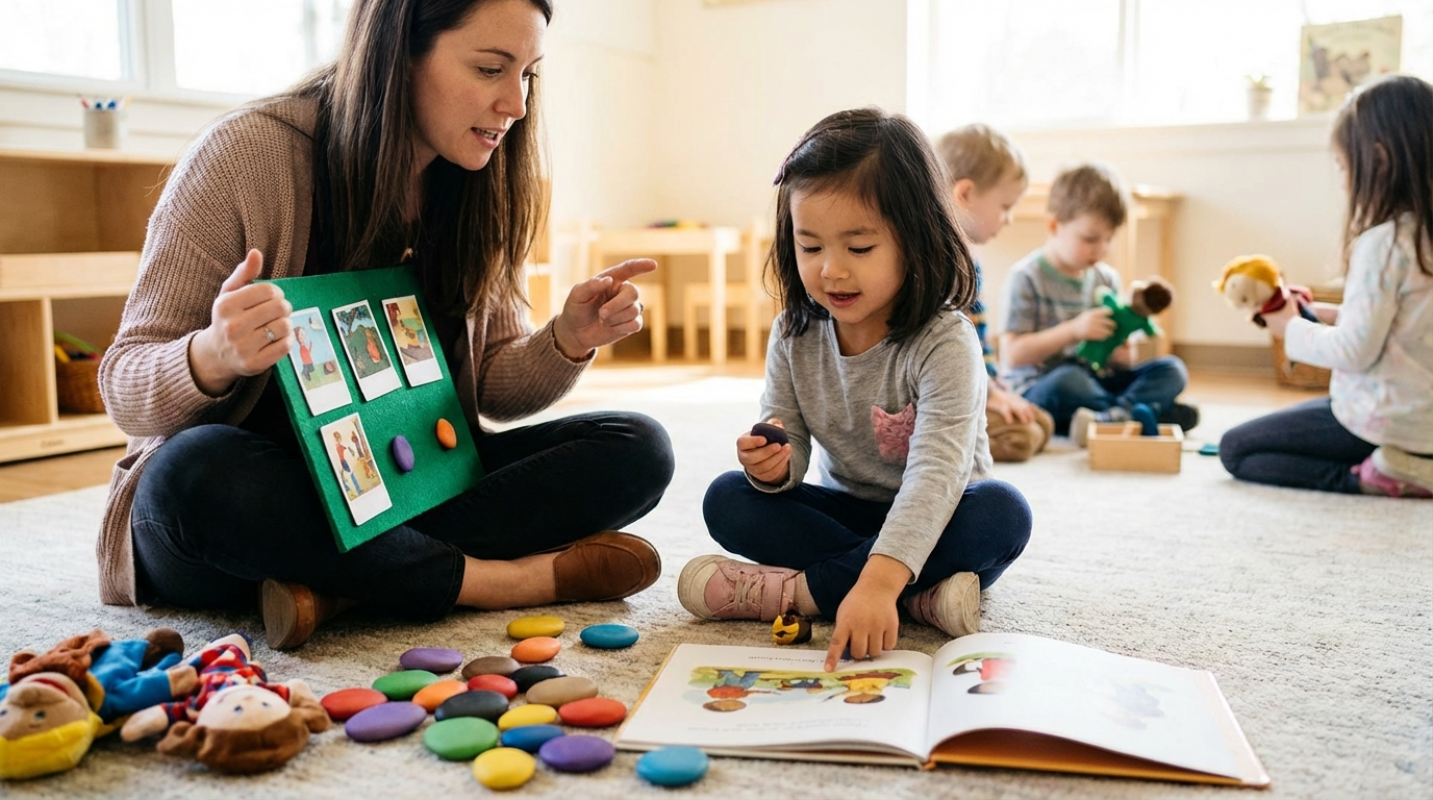
Oral retelling is usually the best place to start. There's a strong link between oral practice and overall reading success. Experts recommend a "Talk-First" approach where students use 3 to 5 specific prompts to guide their thoughts. Instead of saying "Tell me about the book," try asking "What was the turning point for the main character?" It gives them a hook to hang their thoughts on.
For your visual and kinesthetic learners, get creative.
- Comic Strip Creation: Have them draw the six most important scenes.
- Puppetry or Drama: Acting out the "But" and "So" parts of the story makes the conflict feel real.
- Digital StoryMaps: Tools like ArcGIS allow students to map a character's journey across a physical or conceptual space.
Speaking of digital tools, we have seen a massive shift in how we use AI in the last couple of years. Instead of using AI to write the summary for them, students are using AI to compare their own summaries. They might ask a tool to generate a summary of a chapter and then critique it. "The AI missed the part where the hero felt guilty, and that's actually the most important part," a student might say. That is high-level, important thinking.
Expert Tips for Implementation and Assessment
Implementing these approaches doesn't have to be a massive overhaul of your day. Small, intentional shifts are what matter.
Start with scaffolding. If a student is struggling, give them sentence starters. "The main problem started when..." or "Everything changed because..." As they get more confident, you can pull those supports away. It's like training wheels for the brain.
For assessment, stop grading for completeness and start grading for depth. A student who remembers every single side character but misses the central conflict is actually struggling more than a student who forgets the names but nails the emotional arc.
Use a rubric that looks at narrative coherence. Does the retell flow logically? Does the student understand causality? We know from a 2024 study by Antony and colleagues that a coherent narrative actually "warps" time in the brain, pulling related events closer together. If a student's retell is just a list of "and then, and then, and then," they aren't seeing the causal links that make a story work.
At the end of the day, retelling is a life skill. Think about it. When you go to a job interview, you are retelling the story of your career. When you explain a problem to a doctor, you are retelling the story of your health. The ability to take a complex series of events, find the signal in the noise, and communicate it clearly to someone else is one of the most important things we can teach.
This article on strongstudy.com is for informational and educational purposes only. Readers are encouraged to consult qualified professionals and verify details with official sources before making decisions. This content does not constitute professional advice.