 (Image source: Gemini)
 Have you ever watched a child laboriously sound out a word like s-u-n and then, with total confidence, announce that the word is "map"? It is a common, slightly heartbreaking, and often hilarious moment for parents and teachers alike. That disconnect happens because the child has mastered the individual sounds but hasn't yet built the bridge to join them together. In the world of literacy, we call that bridge phonics blending. It is the secret sauce that turns a kid who can recite the alphabet into a kid who can actually read a story. The data show that blending is the single most important predictor of whether a child will become a fluent reader.
Blending Fluency and Early Success
When we say "reading fluency," we aren't just talking about how fast a kid can talk. True fluency is a mix of accuracy, speed, and prosody (which is a fancy word for reading with expression). If a child is stuck spending all their mental energy trying to glue /c/ and /a/ and /t/ together, they don't have any brainpower left to understand what the cat is actually doing in the story.
Think of it like learning to drive a manual car. If you are constantly sweating over the clutch and the gear shift, you aren't really looking at the road or enjoying the scenery. Blending games are like an empty parking lot where kids can practice those shifts until they become automatic.
Recent research into the Science of Reading has shown that 95 percent of all students can learn to read proficiently when they get explicit, systematic instruction. Blending is the heart of that system. When a child can blend CVC (consonant-vowel-consonant) words like "mat" or "pig" without thinking, their cognitive load drops. That is when the magic happens and they start to actually enjoy the book.
Setting Up for Blending Game Success
Before you jump into the games, you need to make sure the "ingredients" are ready. You can't bake a cake without flour, and you can't blend words without grapheme-phoneme correspondence. That is teacher-speak for "knowing which sound goes with which letter."
There is also a big difference between segmenting and blending. Segmenting is taking the word "dog" and breaking it into /d/ /o/ /g/. Blending is taking those sounds and pulling them together to say "dog." Most kids find segmenting easier, so don't be surprised if they can break words apart before they can put them back together.
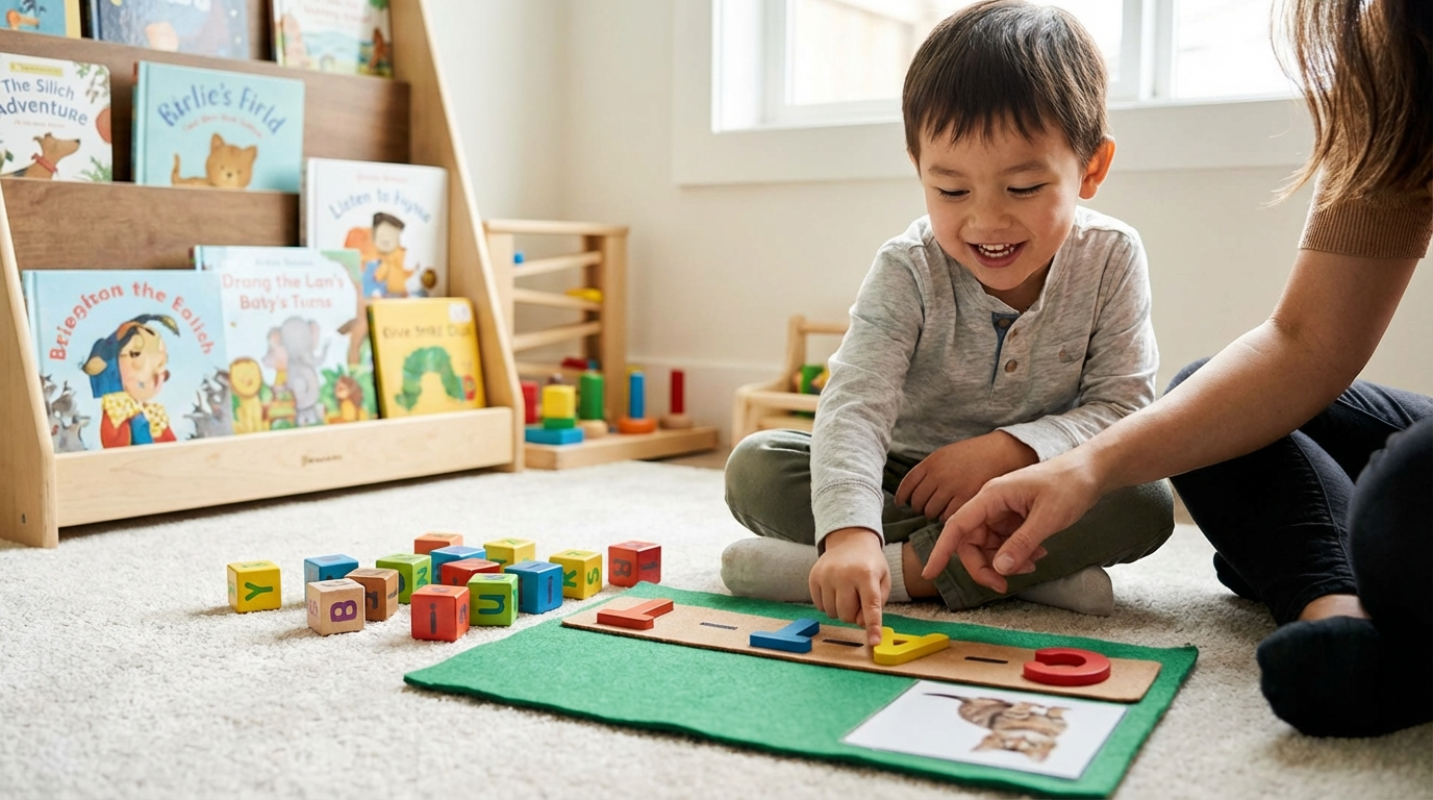
To set the stage, you want a low-pressure environment. If a child feels tested, their brain might freeze up. Instead, use visual cues like "sound buttons." You can draw little dots under each letter. The child presses the dot, says the sound, and then slides their finger across a line underneath to "zip" the sounds together. It turns a mental task into a physical one.
Top 3 Active and Kinesthetic Blending Games
Kids are basically bundles of energy, so why not use that? Moving the body helps anchor the sounds in the brain. Here are three games that get kids off the couch and into the "reading zone."
- Sound Slide: This is a classic for a reason. You can draw a simple road on a piece of paper or even use a toy slide if you have one. Place letter cards for a CVC word like "cat" along the road. The child drives a toy car slowly over each letter, saying the sound as they pass. Then, they "zoom" the car quickly to read the whole word. It is a perfect visual for why we slow down for sounds but speed up for words.
- Word Detectives: Give your child a magnifying glass and some magnetic letters on the fridge. You say a word, and they have to "hunt" for the sounds and physically slide them together to build the word. The act of touching the letters helps with what experts call orthographic mapping. It is the process of turning a string of letters into a recognizable word in the permanent memory.
- Robot Talk: This is a great "no-prep" game for the car or the grocery store. You talk like a robot, saying a word in chopped-up sounds: "I see a /b/ /a/ /g/." Your child has to "translate" the robot talk into human speech by blending the word. You can flip it, too. Ask them to tell you what they want for a snack in robot talk. It builds that phonemic awareness without them even realizing they are working.
As they get better, you can scale the difficulty. Move from CVC words to CCVC words like "frog" or "stop." These introduce consonant blends, which are trickier because the sounds are closer together.
Engaging Digital and Tabletop Blending Activities
Although we love getting kids moving, sometimes you need a "sit-down" activity. Tabletop games and digital tools can provide the repetition needed for mastery without it feeling like a chore.
A favorite tabletop idea is "Roll and Read." You can make a simple grid with words featuring specific vowel teams or digraphs (like "sh" or "ch"). The child rolls a die, finds the corresponding row, and reads the words. If they get it right, they get to color in the square. It is simple, but the "game" element makes them willing to read thirty words when they might have complained about reading five on a worksheet.
Digital integration has become much more sophisticated. We are seeing a move toward "Micro-Phonics," which are short, five to ten-minute bursts of high-intensity practice. Tools like SplashLearn or GraphoLearn use algorithms to figure out exactly which blends a child is struggling with and give them extra practice in those areas.
It is also important to integrate sight words, or high-frequency words, into your blending practice. Not every word can be perfectly sounded out (looking at you, "the" and "was"), but many can. Teaching kids to blend what they can and recognize the "heart parts" of irregular words builds a complete reading toolkit.
Assessment and Moving Beyond Blending
How do you know when your child is ready to move on? You have to keep an eye on how they are "attacking" the words. If they are still hesitating for several seconds between sounds, they need more blending practice. If they are self-correcting and starting to read words as whole units, they are ready for more complex texts.
One great trick is "Successive Blending." Instead of saying /c/ /a/ /t/, have them say /ca/ and then add the /t/. It reduces the "memory load." It is much easier to remember "ca" while you look for the last letter than it is to hold three separate sounds in your head at once.
Once the decoding becomes automatic, you can start playing with prosody. Read a sentence together and then "game-ify" it by reading it like a pirate, a ghost, or a very sleepy person. This shifts the focus from "getting the words right" to understanding the feeling behind the text.
The goal is to build a reader who can pick up a book and get lost in the story because the mechanics of reading have become second nature. Consistent, ten-minute sessions of fun, focused blending practice are the most effective way to make that happen.
This article on strongstudy.com is for informational and educational purposes only. Readers are encouraged to consult qualified professionals and verify details with official sources before making decisions. This content does not constitute professional advice.